MANUAL THERAPY ASSOCIATES / ARVADA, COLORADO
A clear guide to sciatic nerve pain, buttock pain that travels down the leg, and when physical therapy may help.
Pain that starts in your buttock and shoots down your leg can turn a drive, a workday, or a walk into a challenge. If you are searching for sciatica vs piriformis syndrome, you probably want to know two things: Where is the pain coming from, and what can help?
Quick answer: Sciatica describes pain along the sciatic nerve pathway, commonly associated with irritation of nerve roots in the lower back. Piriformis syndrome is a less common condition in which the sciatic nerve may be irritated near a deep muscle in the buttock. Both can cause burning, tingling, or pain down one leg. The symptoms overlap, so a careful examination matters more than guessing from one symptom.
What Is Sciatica?
Sciatica is a pattern of nerve-related pain, not a single diagnosis. It commonly develops when a nerve root in the lumbar spine becomes irritated or compressed by a herniated disk, age-related narrowing, or another spinal condition. The discomfort may travel from the lower back or buttock into the thigh, calf, foot, or toes.
People describe sciatic nerve pain as sharp, electric, burning, aching, or tingling. Numbness or weakness can also occur. Sitting, bending, coughing, or sneezing may aggravate symptoms in some people. And although lower-back pain can be a clue, you can have sciatica without noticeable back pain.
What Is Piriformis Syndrome?
The piriformis is a small muscle deep in the buttock that helps control hip movement. The sciatic nerve typically passes beneath it. Piriformis syndrome describes symptoms that may occur when this nerve becomes irritated in the region of the piriformis muscle.
A common complaint is a deep ache or tenderness in one buttock, sometimes with pain or tingling down the back of the leg. Sitting for extended periods, climbing stairs, running, or certain hip movements may make it worse. Piriformis syndrome is one possible form of a broader problem called deep gluteal syndrome, in which structures in the buttock irritate the sciatic nerve. There is no single definitive test that proves piriformis syndrome.
Important distinction: Piriformis syndrome can produce sciatica-like symptoms, but not every case of radiating leg pain comes from the piriformis. A spinal problem, hip condition, or another nerve issue can feel similar.
Sciatica vs. Piriformis Syndrome: Symptoms at a Glance
These patterns can guide a discussion with your physical therapist. They are clues, not rules for self-diagnosis.
| Clue | Often seen with lumbar-origin sciatica | Often seen with piriformis syndrome |
|---|---|---|
| Where pain is felt | Lower back and/or buttock, with pain that may extend into the calf or foot. | Deep buttock or back of the hip, sometimes radiating down the leg. |
| What may trigger it | Certain back positions, bending, coughing, sneezing, or prolonged sitting. | Prolonged sitting or pressure on the buttock, plus some hip movements or activity. |
| Tingling or numbness | May occur in the leg, foot, or toes. | Can occur in the buttock or leg; symptoms may overlap substantially. |
| Clinical examination | Back movement, nerve-tension testing, sensation, reflexes, and strength may offer clues. | Buttock tenderness and symptom reproduction with selected hip tests may offer clues. |
Five Clues That May Help Explain Your Leg Pain
- Where does the pain begin? Symptoms that clearly change with lower-back movement may point toward a spinal contribution. A dominant deep-buttock ache may make a gluteal source worth investigating. Neither finding confirms a diagnosis by itself.
- Does sitting make it worse? A painful commute or office chair is common with piriformis-related irritation, but sitting can also aggravate lumbar-origin sciatica. Pay attention to whether changing your back position or taking pressure off one buttock makes a difference.
- Does the discomfort reach your foot? Pain, numbness, or tingling that travels below the knee may suggest nerve involvement. Both conditions can radiate, so the exact route of pain is not a reliable at-home test.
- Have you noticed weakness? Difficulty lifting your foot, frequent tripping, or a leg that feels weaker deserves prompt medical assessment. Changes in strength or reflexes can help clinicians look for nerve-root involvement and identify problems requiring further care.
- What started the symptoms? A recent episode of back pain, lifting, or twisting may be relevant. So may a buttock injury, a change in running mileage, or long periods of sitting. Your overall history often provides more useful information than any one symptom.
How a Physical Therapist Tells the Difference
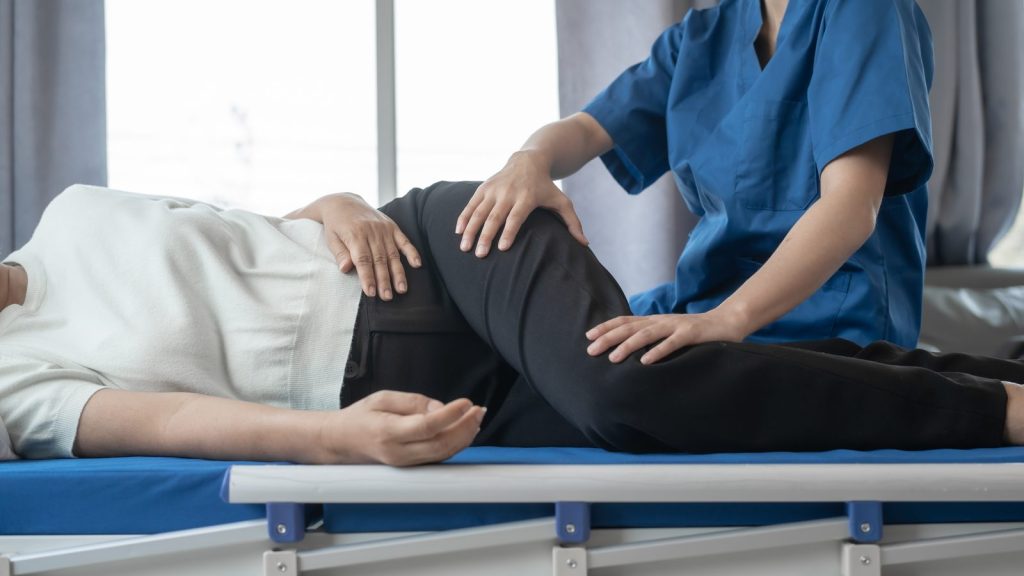
A good evaluation looks at the whole pattern. Your clinician may ask when symptoms began, how far pain travels, whether you have numbness or weakness, and which activities make it better or worse. The examination may include spinal and hip movement, walking, muscle strength, sensation, reflexes, and selected nerve-tension or hip-position tests.
Some people recognize the straight-leg raise test for sciatica or a hip-position test for the piriformis. These tests can be useful, but none should be interpreted in isolation. Because sciatica, piriformis syndrome, hip problems, and other conditions overlap, the diagnosis may require reassessment or a referral for medical evaluation.
An MRI is not automatically necessary for new, uncomplicated sciatica. Imaging or further testing may be appropriate when symptoms are severe, persistent, progressively worsening, or when results would change treatment.

How Physical Therapy and Manual Therapy May Help
The right treatment depends on what is contributing to the pain. At Manual Therapy Associates in Arvada, care emphasizes individualized, one-on-one physical therapy rather than treating every case of leg pain with the same stretch or hands-on technique.
If the symptoms appear to come from the lower back
A treatment plan may include guided movement, gradual return to normal activity, appropriate trunk and hip strengthening, and changes to irritating movements. When suitable, joint or soft-tissue mobilization may be used alongside exercise to improve comfort and movement.
If the piriformis or deep gluteal region appears involved
Treatment may focus on improving hip strength and control, modifying activities or sitting positions that aggravate the area, and introducing comfortable mobility exercises. Selected soft-tissue or neural mobilization techniques may be considered based on how the nerve and nearby tissues respond.
Why exercise and self-management still matter
Manual therapy is not a stand-alone cure for every form of sciatic pain. Clinical guidance supports pairing hands-on treatment, when appropriate, with exercise and education. The goal is to help you move with greater confidence and develop a practical plan for work, walking, exercise, and everyday life.
You can learn more about the clinic’s back and neck pain treatment, manual therapy services, and how neural manipulation may fit into nerve-related care. Related reading: addressing sciatica through manual therapy and SI joint pain vs. lower back pain.
What Can You Do for Buttock Pain That Travels Down the Leg?
While you arrange an assessment, the following lower-risk steps may help you stay comfortable:
- Change positions frequently. Break up long periods of sitting and choose positions that do not increase leg symptoms.
- Keep moving within your tolerance. Short, easy walks or other comfortable activities are often more useful than prolonged bed rest.
- Avoid forcing stretches. Aggressive piriformis stretching, deep foam rolling, or exercises that intensify shooting pain or numbness may aggravate sensitive tissues.
- Track your pattern. Note where pain begins, how far it travels, what triggers it, and whether your strength or sensation changes. These details can make your visit more productive.
If an activity causes increasing tingling, weakness, or pain farther down the leg, stop and ask a clinician for guidance. Exercises that help one person may be inappropriate for another.
When Is Leg Pain an Emergency?
Seek emergency medical care immediately if you develop new loss of bladder or bowel control, numbness around the groin or saddle area, or sudden significant leg weakness. Serious symptoms after a major accident also need urgent evaluation. These signs should not wait for a routine physical therapy appointment.
Arrange timely medical assessment for new or worsening numbness, weakness, severe pain, or symptoms that are not improving or keep returning. Not every leg-pain problem is sciatica.
Frequently Asked Questions
Can piriformis syndrome cause sciatica?
Yes. Irritation of the sciatic nerve near the piriformis muscle can cause sciatica-like buttock and leg pain. However, sciatica is often associated with nerve irritation in the lower back, and similar symptoms can have several causes.
Can you have sciatica without back pain?
Yes. Some people mainly notice pain, numbness, or tingling in the buttock or leg, even when the source is in the lumbar spine.
Why does my buttock hurt and the pain travel down my leg when I sit?
Prolonged sitting can aggravate a sensitive sciatic nerve, whether the irritation is related to the back or the deep gluteal region. A clinician can assess which movements and positions reproduce your specific symptoms.
Do I need an MRI for sciatica or piriformis syndrome?
Not always. A history and physical examination often guide the initial plan. Imaging may be recommended if red flags are present, symptoms do not improve, or the result would affect medical decisions.
Is walking good for sciatica or piriformis syndrome?
Gentle walking is often reasonable if it does not worsen your symptoms. Start with what you can tolerate rather than pushing through increasing nerve pain, and ask your physical therapist how to progress safely.
Looking for Sciatica Treatment in Arvada?
If you are dealing with sciatic nerve pain, persistent buttock pain down the leg, or symptoms that are making it difficult to sit and move comfortably, an individualized assessment can help determine the next step. At Manual Therapy Associates, Dr. Sandra A. Do, DPT, OCS, FAAOMPT, provides one-on-one manual physical therapy in Arvada, Colorado.
Call or text 303-668-2898 or contact the Arvada office to discuss an appointment. The office is located at 12001 W. 63rd Place, Suite 202, Arvada, CO 80004. Visits are by appointment.
General educational information only; not a substitute for individualized medical advice.