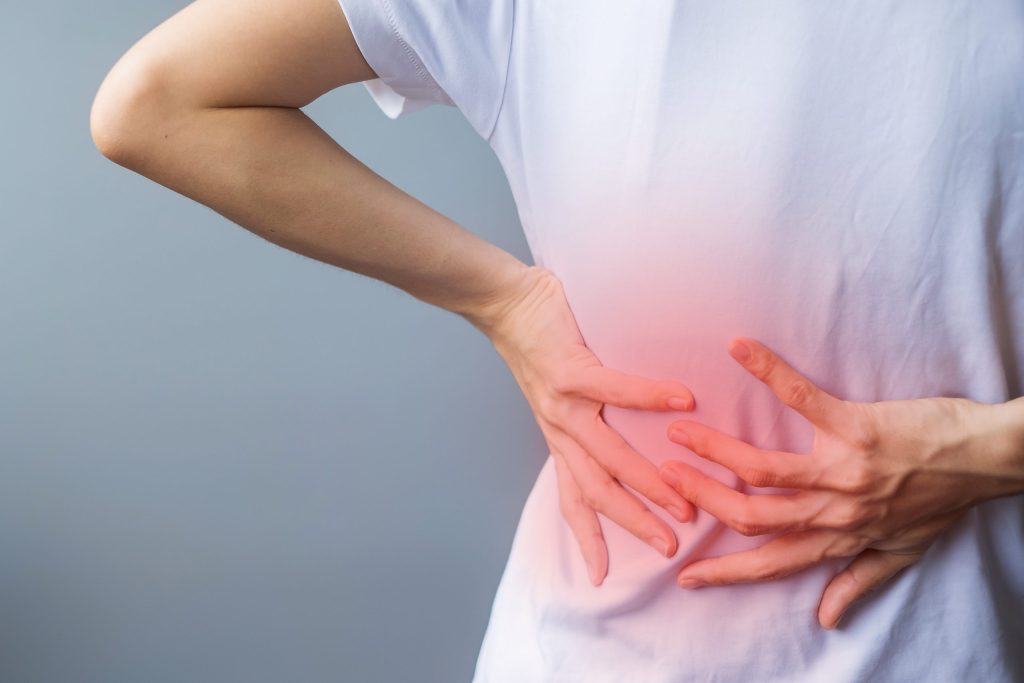
Pain near the belt line can be frustrating because the source is not always obvious. A sore sacroiliac (SI) joint can feel like ordinary lower back pain, while a problem in the lumbar spine can sometimes be felt in the buttock or hip. Because these areas overlap, location alone is not enough to make a diagnosis.
At Manual Therapy Associates in Arvada, Colorado, the goal of an evaluation is to determine which movements and structures are most likely contributing to your symptoms. That matters because the best treatment plan for SI joint pain may differ from the plan for lumbar joint, muscle, disc, or nerve-related pain.
Quick Answer: SI Joint Pain vs. Lower Back Pain
| SI joint pain is often felt on one side of the low back or upper buttock, close to the “dimple” area where the pelvis meets the spine. It may worsen with stairs, turning in bed, standing on one leg, prolonged sitting or standing, and moving from sitting to standing. Lumbar low back pain may be more central or spread across the back and can be aggravated by bending, lifting, prolonged positions, or spinal movement. Numbness, tingling, weakness, or pronounced nerve-type pain into the leg makes a lumbar nerve source more important to evaluate. These patterns overlap, so a physical exam is more reliable than symptoms alone. |
What Is the SI Joint?
You have two sacroiliac joints, one on each side of the pelvis. They connect the sacrum at the base of the spine to the ilium, which is part of the pelvis. These joints transfer load between the upper body and the legs while allowing a small amount of movement.
When the tissues around an SI joint become irritated or the joint is not tolerating load well, pain may develop around the back of the pelvis. Research and clinical guidance estimate that SI joint dysfunction may account for roughly 10% to 25% of people presenting with low back pain, which is one reason it is frequently confused with lumbar pain.
SI Joint Pain vs. Lower Back Pain: Common Clues
| Clue | More suggestive of SI joint pain | More suggestive of lumbar low back pain |
| Typical location | One-sided pain near the back pelvic “dimple,” upper buttock, sometimes groin or thigh | Can be central, one-sided, or across the low back; may extend into buttock or leg |
| Common triggers | Stairs, turning in bed, sit-to-stand, standing on one leg, prolonged sitting/standing | Bending, lifting, twisting, prolonged sitting/standing, repeated spinal movement |
| Nerve symptoms | Numbness or weakness is less typical and should prompt evaluation for another source | Leg numbness, tingling, weakness, or radiating nerve pain may occur with lumbar nerve involvement |
| Testing | Pain may be reproduced with a cluster of SI joint provocation tests | Lumbar movement, neurologic testing, strength, reflexes, sensation, and nerve tension may help identify a spinal source |
Signs That May Point More Toward SI Joint Pain
SI joint pain often has a recognizable pattern, although not everyone experiences the same symptoms. Clues that may raise suspicion include:
- Pain mainly on one side of the low back or upper buttock.
- Tenderness near the bony “dimple” just below the belt line.
- Pain when climbing stairs, getting out of a chair, or shifting weight onto one leg.
- Pain when rolling over in bed or lying on the affected side.
- Discomfort after prolonged sitting in a car or standing for a long time.
- Pain that began after a fall, awkward lift, car accident, pregnancy/postpartum changes, or repetitive loading.
SI joint symptoms can also travel into the buttock, groin, thigh, or sometimes farther down the leg. That is why the phrase “my pain is in my buttock, so it must be sciatica” can be misleading.

Signs That May Point More Toward the Lumbar Spine
Lower back pain is a broad category. Symptoms can come from muscles, joints, discs, nerves, or a combination of factors. A lumbar source becomes more important to evaluate when pain changes clearly with spinal bending or repeated movements, is centered closer to the spine, or is accompanied by neurologic symptoms.
- Pain that is central in the low back or spreads across both sides.
- Symptoms that consistently worsen with bending, lifting, or repeated spinal motion.
- Pain radiating down the leg with numbness, tingling, burning, or electric sensations.
- New weakness in the leg or foot.
- Changes in reflexes or sensation found during a clinical exam.
These signs do not automatically mean a disc problem or “sciatica,” and SI joint pain can still occur alongside lumbar pain. The point is to identify the pattern rather than label the problem from one symptom.
Can You Test the SI Joint Yourself?
Online self-tests are not a dependable way to diagnose SI joint pain. Individual SI tests have limited accuracy when used alone. Clinicians instead look at your history, movement, hip and spine function, neurologic findings, and a cluster of pain-provocation tests. Clinical guidance commonly uses at least three positive tests out of five SI provocation tests to increase confidence that the SI joint is contributing to the pain.
Imaging can be useful when a clinician needs to rule out other conditions, but an MRI or X-ray does not always identify whether the SI joint itself is the pain generator. In difficult cases, physicians may use an image-guided diagnostic injection to help confirm the source.
How Physical Therapy Can Help
Treatment should match the findings of the exam. For SI joint-related pain, conservative care may include education, activity modification, pelvic and core stabilization, hip strengthening, flexibility work, and manual therapy when appropriate. The goal is to improve how the pelvis, hips, and spine share load rather than simply “put the joint back in place.”
For lumbar low back pain, the plan may emphasize spinal or hip mobility, graded strengthening, trunk control, walking or aerobic activity, nerve mobility when indicated, and strategies for returning to work, exercise, or sport. Manual therapy may be used to reduce pain or stiffness so that active rehabilitation is easier to perform.
At Manual Therapy Associates, treatment is one-to-one and hands-on. Dr. Sandra A. Do has advanced orthopedic manual therapy training and decades of experience treating back and neck pain. Your program is based on what reproduces your symptoms, what movements are limited, and what you need to get back to doing.
When Should You Seek Medical Care Quickly?
Most musculoskeletal low back and SI joint pain is not an emergency, but some symptoms need prompt medical evaluation. Seek urgent care for new loss of bowel or bladder control, numbness around the groin or saddle area, rapidly worsening leg weakness, severe pain after major trauma, fever with severe back pain, or other symptoms that feel rapidly progressive or unsafe. Unexplained weight loss, a history of cancer, or persistent night pain should also be discussed with a medical professional.
Physical Therapy for SI Joint and Lower Back Pain in Arvada, CO
If pain near your low back, pelvis, or buttock keeps returning, guessing at the source can lead to the wrong exercises or repeated flare-ups. A detailed physical therapy evaluation can help determine whether the SI joint, lumbar spine, hip, nerves, or several areas are contributing.
Manual Therapy Associates provides one-to-one physical therapy in Arvada for patients with back pain, joint stiffness, movement limitations, and complex musculoskeletal problems. The clinic is located at 12001 W. 63rd Place, Suite 202, Arvada, CO 80004. Call or text 303-668-2898 to schedule an appointment.
Frequently Asked Questions
Where is SI joint pain usually felt?
It is commonly felt on one side near the back of the pelvis or upper buttock, often close to the bony dimple below the belt line. It may also refer into the groin or thigh.
Can SI joint pain feel like sciatica?
Yes. SI joint pain can sometimes travel into the buttock or leg, but numbness, tingling, or weakness raises greater concern for nerve involvement and should be assessed clinically.
Is walking good for SI joint pain?
Walking can be helpful for many people, but the amount should be guided by symptoms. If walking consistently increases pain, a physical therapist can assess gait, hip strength, load tolerance, and other contributing factors.
How long does SI joint pain take to improve?
Recovery varies with the cause, how long symptoms have been present, activity demands, and other health factors. Improvement is usually judged by function and symptom trends rather than a fixed number of visits.
Can manual therapy help SI joint pain?
Manual therapy may help reduce pain or stiffness in some people, especially when paired with strengthening, mobility work, education, and a progressive return to activity. Treatment should be individualized after an examination.